I’m trying to decide if there is a viable solution (technologically and financially)…
I have a lot of clear bins. They are all numbered. I have an inventory system I wrote where I track what is in each bin, which I can also look up where something is.
The challenge is the only easy way to find a bin is to keep them in numerical order. This is not always easy to do.
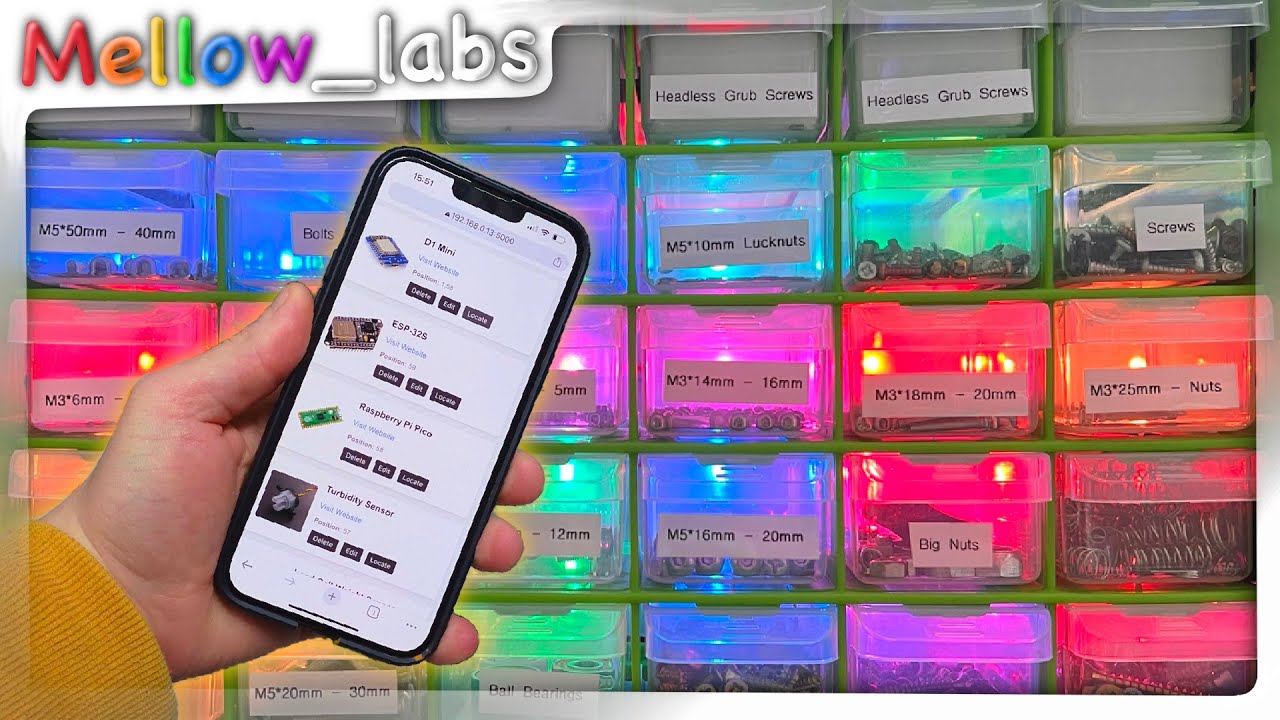
What I would like is some small tiny module that runs off a tiny battery (think coincell) that has an LED that could be activated wirelessly.
The idea is simple, in my inventory app, I say “find bin” and it flashes the LED on that bin for instance retrieval.
Any ideas on products that fit this description, or parts I could make/code to do this? I have hundreds of bins so they have to be really cheap… and need to last a long time on a battery.
I was thinking maybe something like one of the Nordic BLE chips could do this within the power constraints.
Having hundreds of bins also means hundreds of batteries so battery life is a concern. Being able to push a command to it is likely out of the question as leaving the RX on would kill the battery quickly.
Seems the best way is to have the module advertise every x seconds and have a central listener that looks up the ID against a list of bins to blink, and if so, then will connect to the module during the connect window in the advertisement and give it a blink command.
Sounds like a lot of work I don’t have time for. lol.
Try thinking of it from 180 degree perspective. Instead of identifying each bin wherever it ends up, try tracking where it’s actually located.
I’m thinking using something passive on the back of each bin, so that when racked, the rack can ID the bin, and know it’s location. No batteries. You’d probably have to dump the IDs and there associated info (contents) into something like an excel spreadsheet that auto updates.
So if you need a blue 5mm LED, that bin is identified via some UID and is in Row4 Column5. But if you pull the bin, and put it back somewhere else, then it removes it from your spreadsheet when pulled, and puts it back in the spreadsheet when re-racked.
Add a desktop scanner so that if you pick up a bin from the table, you can pass it in front of it, and it identifies the contents. (assuming you haven’t swapped the contents).
I think this would be a better approach, but while most bins are in a given area, they are not the same size so there isn’t really any pattern to know what a rack “slot” is. Also there are lots of bins that are on shelves in other areas. So I don’t think outfitting the rack with any hardware would be viable.
I have that sparkfun board and a big panel antenna.
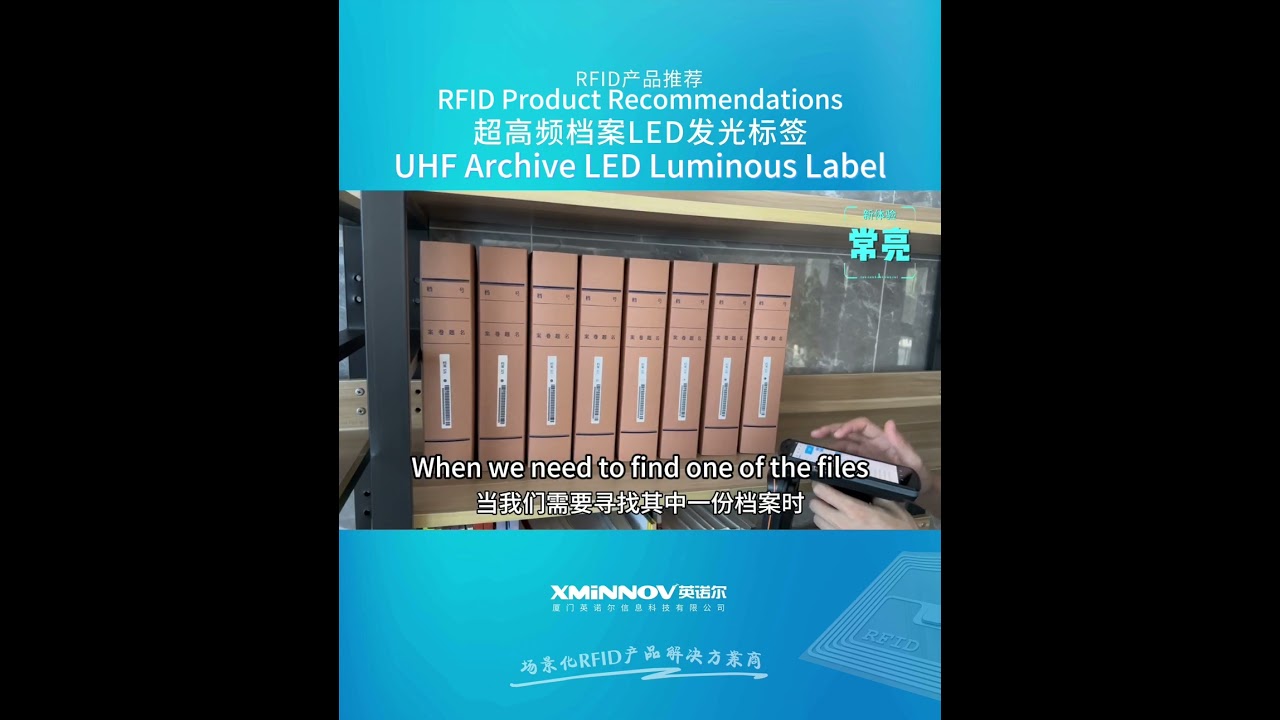
Thanks for showing me those tags. I had no idea that UHF tags could gather enough power to light an LED. I wonder how you address it to activate the light.
Tags are cheap so I like this idea, but would have to think about how I would deploy the hardware so it works in the closet, the kitchen, the garage, and the shop. Bins could be anywhere… I don’t want to have to have a separate handheld scanner… But definitely curious about how those tags work.
Oh, found the datasheet. Very interesting, definitely a contender. Thanks!
The nice thing is BLE (bluetooth low energy) doesn’t work like that. It works like this;
the battery powered thing pings out an advertising packet every so often. The size of this packet and frequency of transmissions (not the RF frequency, how often it transmits the advertisement) drastically impact battery life.
anything wanting to communicate with it must do so during a very short RX window just after the advertising packet.
So, you can;
not transmit anything in addition to the minimal required data (no application data).
transmit advertising packets far less often than the typical rate. you could slow the transmit rate to somewhere around every 10 seconds and that would still be usable. that means the maximum amount of time you’d have to wait between issuing the command and waiting for an advertising packet from the bin in question to arrive would be 10 seconds. the practical average would be less than that of course.
use larger battery than the typical CR2032 battery for this. I would suggest you use two AA batteries… it would last years and years. if using AA is not physically practical, at least use a larger CR button cell… something like the CR2477 which has a full 1000mAh vs the CR2032 with only 225mAh.
Ok so I see approx 50 bins in this pic… and shelf space for another 100 maybe… I assume you have 2 storage sheds and a 4 car garage filled with bins as well?
hmm… yeah UHF with blinky LED and some strategically mounted UHF panels might work… at least if you don’t have full coverage you might be able to do movement logging… like “bin 5 last passed out of X and into Y area”, at least narrow your search?
I haven’t finished moving the bins in… they’ve been stacked in my living room for 1.5 years. I just put those shelves up on Monday. I’m up to bar code label 177, so I guess technically I don’t have hundreds, I’m 23 short of that, lol. And they won’t all go in here, but the majority will.
Unfortunately there are several uninstalled implants in that box I never got around to doing.
I have to think about if I really need wide area coverage that BLE provides, or I can limit it to 1 or 2 areas. I definitely have at least 2 areas that are bin-dense. If there are a few bins in the cabinet in the kitchen, it’s not going to be hard to look at the bin number. It’s really only an issue where there are a lot of bins… though also there are some scenarios, which are arguably one of the more important corner cases where a bin ends up behind another bin. In that case the UHF tag LED may not be in a spot that could be seen, whereas a BLE tag could have an LED that would light the bin up. Think I need to pick up some of these LED UHF tags and do some test.
I do like the idea of active tracking… being able to see where it was last scanned… maybe I’ll put readers everywhere lol.
So this is what I came up with… A bit of a different direction than the original idea, but a LOT less expensive..
These are ArUco markers that , with a lot of searching, have OpenCV android library builds that support marker detection. Works well I think. Not as good as a glowing bin, but also only cost me $12 for new larger labels.
The first labels I tried were smaller and they worked but found a couple issues. First, I printed the marker as big as I could to get the best reader distance. Turns out without enough white space around the edge when there are black things in the bin, it doesn’t detect consistently. Also I didn’t like the number was kinda of hidden. So I bought larger 2x3in labels and these get good read distance and are also easier for humans to read.
Additionally I bumped the resolution of the image processor (it was initially doing 640x480, which also helps detection distance, albeit a little slower.