I’m working on a project where we’re using UHF-RFID tags to improve the production process at the company where I work.
I was wondering if there’re any ideas about using UHF-RFID tags for implants? Those tags have some amazing properties like long range readability. The best is that some of those tags are able to use near field antennas. This means that any simple design of conductive material in the tags vicinity will become the antenna.
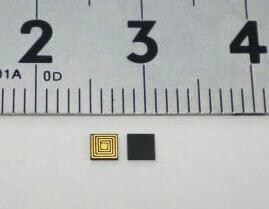
A good candidate for an implant would be the IM5-PK2525 from Hitachi. It contains the Monza 5 chip from IMPINJ and has an integrated antenna which don’t require any additional antenna designs. The reading range is about 20mm depending on the reader antenna.
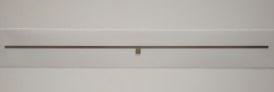
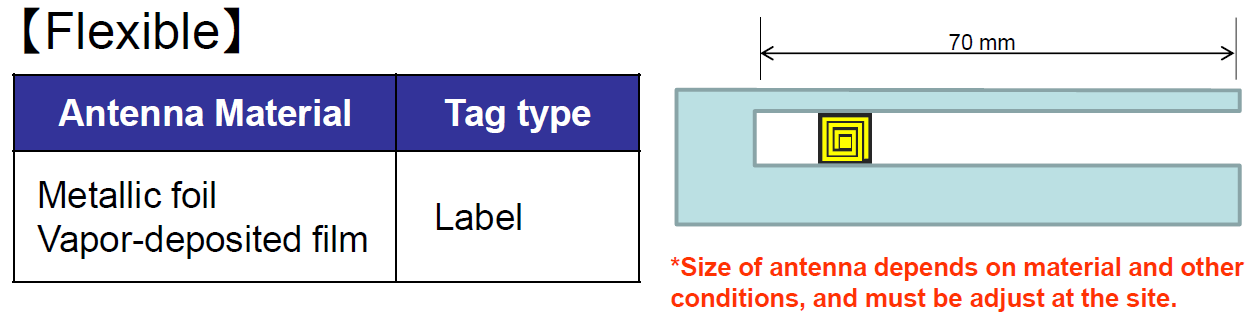
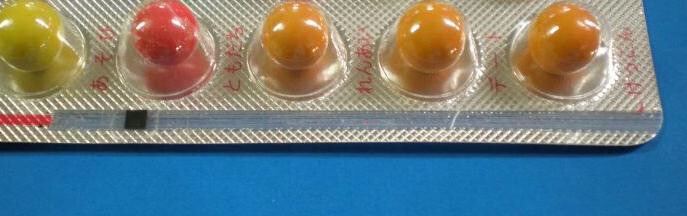
This booster antenna designs would give a reading range of up to 1 meter.
@amal Could you produce an implant with the IM5-PK2525 chips for testing? Also, the latest chip from Hitachi is the UC7-PK2020B which contains the NXP UCODE 7 IC and it’s only 2mm x 2mm x 1mm with integrated antenna. Is there a way to turn those into an implant?
Yes we could encapsulate… the question becomes interference from the body. UHF backscatter is much more susceptible to signal killing interference from salty water (human body). Stick some tags you want to try onto your arm and tape over them and test performance. To make it even more accurate, fill a polymer bag with dark brown sugar and flatten it down to a layer that is at least 2mm thick. Then place that overtop the tag and tape it down and test again. Brown sugar is commonly used in RF testing as a human tissue analog and it’s less messy than raw meat.
I’ve got s bunch of uhf tags and a smaller cheap USB reader. Once you put the tags even just on the skin, range drops to basically zero. Under the skin has no chance.
I wonder how well a LoRa implant would work. It’s the same frequency range (at least in the US) so there would probably be a lot of attenuation, but OTOH it wouldn’t be powered by the reader but presumably by a Qi charger, so it would be putting out a lot more power.
No not really because it’s not a tuning issue. UHF uses back scatter not inductive coupling, the material (AKA your salty blood) simply absorbs a lot of power. When the UHF reader sends out a pulse of energy, some of it is absorbed but that’s not the issue. The tag has to absorb some power from that pulse, power itself to generate the RF response, then rebroadcast it’s response to the reader using the leftover energy it has after powering itself. That’s a very small signal, and that’s the signal that gets swallowed by your blood, water, metal, whatever the source of interference might be it totally squelches that response.
Claims a fabricated passive UHF tag had “maximum read ranges of 2.0 m (free space) and 1.4 m (aqueous environment)”, though not how compact “compact” is, or the reader design in a way I understand.
Paywalled.
claims 30 cm in free space but only 3.6 cm reliably in “commercially sourced poultry
biotissue - from a supermarket” with a +9 dBi linearly polarised antenna and 36 dBm (4 Watts) radiated power.
So no read range advantage to already available lower frequency implants read with lower power readers.
And while I found UHF ear tags for sale, I didn’t find any implants from a quick search.
So even more curious about the specifics of the first paper.
an admittedly lower power USB reader similar to the reader constructed in the reference paper above
small UHF tags suitable for implantation (not full sized UHF tags)
I was getting 30cm - 60cm in free space and 0cm (no reads at all for most) when the UHF tag was simply placed on my hand or arm. One particular tag did read at 5mm distance, but I feel this would be reduced to no-read performance if it went subdermal.