I made this ESP32 watch, printed with PLA on my Prusa.
Really simple thing, but looks great I think. Source
Hardware: ESP32-S3 SuperMini, MAX7219 Dot Matrix, some glue and a bit of PLA, and voilá.
More inspiration for wearable stuff to design and print.
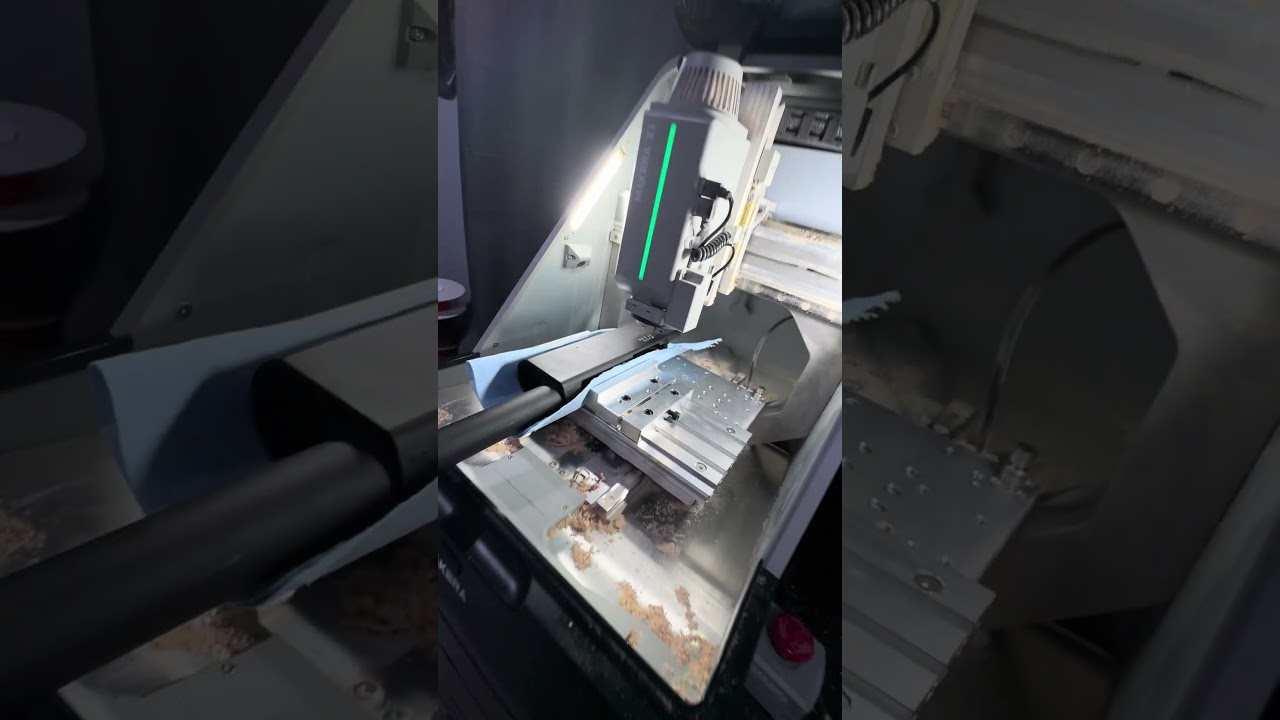
A little bit of nfa engraving at home for funzies
Slightly off topic, but has anyone messed with HT-PLA?
It’s the 3D printing thread. While I haven’t messed with that particular filament, I will recommend giving PETG a try.
The use case involves a lot of shock and humidity, so PETG is a no-no from my understanding. It apparently likes to fail spectacularly. Rigidity is also important.
Trying to bridge the gap a bit, but also trying to avoid trying to run PA6-CF through my ender3
Then ASA is probably your best bet. But you need to run the bed really hot if you don’t have an enclosed printer.
Hmm, ASA looks promising. Looks like its glass transition is around 100c, which is right there where I need it.
Thank you
ASA is slightly better than ABS, but it’s a close relative in both chemistry and characteristics.
I prefer ASA because it doesn’t degrade with UV light and it can withstand higher temperatures. It also has a reputation of being easier to print, but this varies between manufacturers depending on the additives that they use.
Both are great for applications were dimensional stability matters as they don’t creep under pressure. However, printing them requires patience as these materials have a stronger tendency to warp.
Yeah. I think once I’m through all my ABS I’m gonna try a few rolls of ASA. I’ve had pretty good luck printing ABS, except in the winter when it’s cold. Now whenever I’m going to print ABS I turn on the bed + chamber fan for an hour or so beforehand to let the whole chamber really warm up.
Thankfully my printer is in a detached garage with vents + fans and a hepa filter in the printer so I don’t think I have to worry about fumes too much.
Thankfully I don’t use my printer for a large number of projects, its this or that here and there. Usually 50mm/s is fast enough to not drive me crazy on the large stuff.
You can print it at higher speeds. The patience that you need is to troubleshot things, to run bed mesh leveling before every print, and to warm up the printer chamber if yours is enclosed.
There’s a slicer option that reverses the direction in which the perimeters are printed to help reduce internal stress. It can help a lot when printing ABS and ASA.
Bed Slinger
Open air
I fear no man, but warping…
ive done a cardboard box over the printer and it works great at preventing draft and raising the temp a bit in there …
Or run the bed at 110C, give it a few minutes to even out temperature wise, and print in the center of the bed. A hot draft will form which is enough for most parts.
I fell in love with ASA when I had an Ender 3 and no enclosure.
groans
Those look sick
I should pick your brain, trying to learn as I go but I’ve been struggling with some stuff also
think I want to try an aluminum Lego block soon,
I have a lot of plans that would involve 2 or more sided operations, and re alignment is a bit of a fuzzy concept in my head, would be really annoyed to machine one side and then be out of alignment on the other
Need to make a bunch of dice trays to fit into my dnd table, but been running into wood warping when deeply pocketing, couple different approaches etc
This picture makes it look worse than it is, but the oak being open grained was a learning moment that it negatively effects relief carvings
Ask away, happy to share whatever i can 
Im struggling with a few things too, its so different from traditional CNC systems, its a whole new learning curve …
Oh how do you get the chamfer to work?
Should I design chamfers into part before hand, or sharp corner and assign a 2d chamfer path?
I couldn’t get it to take, just kept yelling about me about it intersecting


