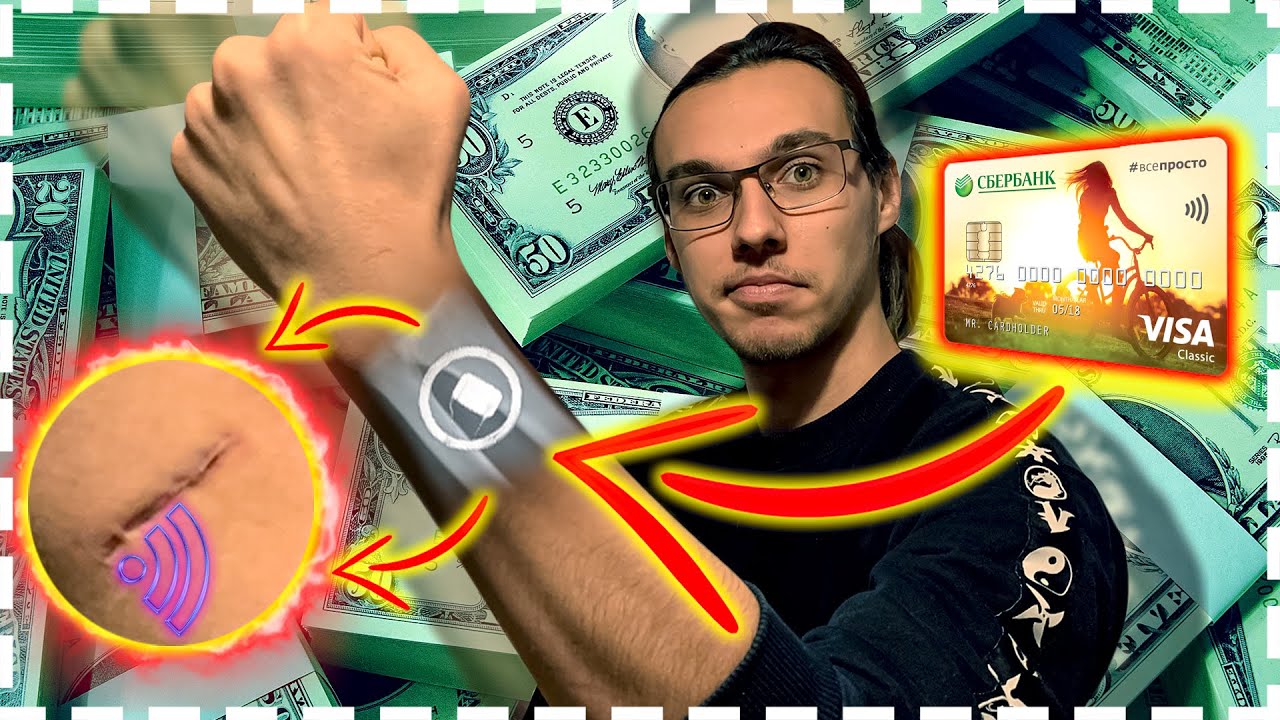
I’m a student from Poland currently working on an academic research project about payment implants.
Because payment implants are such a niche subject, I’ve found it surprisingly difficult to determine which companies have actually manufactured payment implants, which only distributed them or provided payment components.
I would really appreciate your help with a few questions:
1. Which companies have actually manufactured payment implants for humans, either currently or historically?
2. Are there any manufacturers, products, or payment-implant projects that you think I may have missed?
3. How large do you think the payment-implant market actually is?
I’m looking for any approximate information regarding the number of users, implants sold or implanted, or the overall global market size. Even rough estimates based on industry experience would be very useful, as I have not found any reliable data.
4. Which countries or regions currently show the greatest interest in payment implants?
Any information based on sales, customer numbers, implantation figures, or your own experience would be very valuable.
Thank you in advance to everyone who is willing to share their knowledge.
I just thought I would share the following conversion done by an individual rather than a company.
It’s unlikely to affect your overall numbers as there are probably only a handful of people who have done this or similar (I would also not reccomend)
Some more research you can do, that I am sure Amal will mention.
Look up Walletmor
“Walletmor is a Polish-British financial technology start-up that offers the world’s first commercially available contactless payment microchip implant”
Here is a more accurate take from Amal
Also, Dangerous Things were also offering a conversion service before Walletmor, but I guess it depends on the definition of commercially avaliable.
Here is my conversion write up if it helps…
Hopefully that will get you started and Amal will be along to fill in the gaps
Thank you very much for such a comprehensive response and, especially, for taking the time to record the video. I really appreciate it.
What you explained is very consistent with what I had already observed during my research that almost everything I came across regarding payment implants eventually seemed to lead back to Dangerous Things in one way or another. Seeing how deeply DT has been involved in the development and production of so many of these solutions was therefore particularly impressive.
What intrested me most was that the main obstacle to the development of payment implants seems to be not the technology itself, but rather the reluctance of major payment networks to support them. Based on your comments and some previous statements by Wojciech Paprota, I understood that concerns about controversy and public perception may play an important role.
Have Visa, Mastercard, or any other major payment network ever officially explained why they do not support or certify payment implants? Have they ever stated what would need to change or what requirements would need to be met for an implanted payment device to become eligible for certification?
I also have one question regarding the one model. Is NxtPay Infinity also a conversion performed by Dangerous Things? I asked Upgraded Humans who manufactures NxtPay Infinity, but the only answer I received was rather vague: “Production takes place in Germany and the USA.”
I also wanted to ask whether you have ever considered working with alternative European payment schemes, such as Spain’s Bizum, the Netherlands’ iDEAL, Poland’s BLIK, or similar domestic solutions. I realize that these systems are largely specific to the European market, but I was wondering whether, from a technical perspective, integrating a payment implant with such a system would be possible at all. I was wondering whether such solutions could somehow help overcome the current deadlock.
Yes we manufacture it, however it is provided to us already “stripped” from the source device. I believe this is the Germany part of the equation. We receive the Infineon SPA2.1 modules (antenna substrate with chip on board), encapsulate them in our biopolymer, then package and gas plasma sterilize them. They are shipped back to UH for packaging into the final kits.
There has always been an option for customers who can source viable payment instruments for conversion, regardless of system;
However, technically the system would basically need to be a passive RFID / NFC based system to work as an implant. For example, how would you propose BLIK work as an implant since it’s a mobile app + rolling code based system? If the idea would be to “work with them” as in collaborate to bring a contactless option to the BLIK system, then technically possible but practically impossible since it would require the buy-in and coordination of everyone in the payment industry from processors to terminal makers to EMV certification houses to merchants needing to update / upgrade payment terminals etc. etc. etc. you might as well ask to move Mt. Everest using a couple of soup spoons.. technically possible, but yeah no.
The word somehow in that sentence is doing a nuclear fusion reactor’s worth of work there
I think this will make more sense after watching this;