
Sometimes we a do a thing like a proof of concept run–or statement in the case of the xGLO–that will never be a regular item. Other times, a flaw is a found or some hurdle appears and we end of life a product. Regardless of the reason, this post will cover the what it was and why it isn’t anymore for those implants that are no longer offered.
m31

This beast, to date, is the most performant sensing magnet ever offered–at least that has been documented. Its 3x1mm n52 core is coated in Titanium Nitride–an incredibly thin, biocompatible material.
It was discontinued after @amal noticed his breaking down coming up a year after install. He discusses it in this video.
xG3 v1

The original injectable magnet. After lessons learned from the m31, @amal arrived at this fatboy. He theorized that the torsional field response of an axial magnet would produce more stimulation so he labeled it a sensing magnet. These days, not so much I think.. But it does have intriguing haptic potential..
Ultimately, like the Death Star, it had a critical flaw: its axial magnetization pulled things directly onto the weakest parts of glass implants, the end caps. This resulted in enough failures for him to put out an advisory as well as discontinue sales and production. Which is where the xG3 v1r comes in.
xGLO

The Firefly (v1 and v2) were glass encapsulated tritium vials. They glowed under the skin through radioluminescence. The quality of construction was concerning, as @amal notes here. His response was a limited run of this product done in the safest way. It was not something he wanted to produce long term.
flexNExT

A giant, high performance flex version of the NExT: a flexEM combined with an NTAG216. This was the Wild West Era of flex product development. “Put an LED in it,” could have been the flex slogan.
Check out the official statement. Ultimately, the HF tags used to make these happen were too delicate for long term use in nearly any location. I say nearly not because I can name anyone with a working one but because it’s possible. To make things worse, the LED NFC nails used also had a tendency to fail quickly.
flexMN
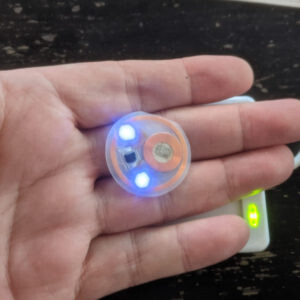
In the dark times before the flexUG4, there was the flexMN. It was done as a small batch because of the outlandish per chip costs. And because it was the era, he put a t5577 in middle and threw in LED nails if folks were into it.
As a small batch item, it was never intended to stay around. The low interest rate and high polymer waste in the giant form factor didn’t help much. And then came along the flexUG4.
flexMT

Because range matters, there was demand in the flexM1 department. This giant magic MIFARE Classic 1k implant was exactly that–but with a flexEM. And blinkies, if you liked. I suppose we could consider this the predecessor of the xMagic.
In many ways it’s story is similar to the flexMN. It’s huge. It wastes a ton of material. And it’s packing the same enamel antennas we retreated from as the failures arose. Any motion over a long enough time will cause those to wear through and short.
Titan
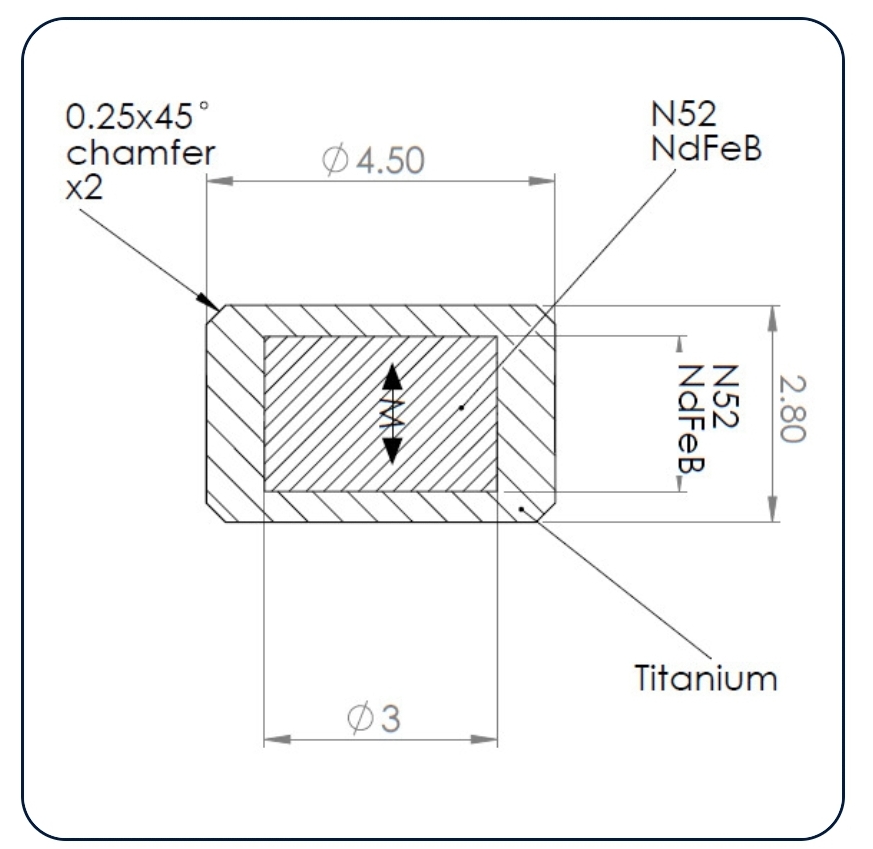
The first and only purpose built titanium encapsulated biomagnet! It was conceived here. Originally crowdfunded this ran in three campaigns before becoming an item for a brief period.
The cold, hard, economic realities of the post-pandemic manufacturing world left the Titan in a lurch: it simply isn’t cost effective to produce such a small, high-precision part, at the small quantities required.
Apex Mega

The Apex Mega and what would become the Mega Spectrum is one of those things early members of the DT Club followed alongside it’s narrow counterpart. Members of the club had the chance to preorder the narrow variant (then called Apex Flex), however, due to delays, they were offered a free upgrade to the Mega. I have one of these and it is, to this day, my most used implant.
Like so many other flex devices, this one was killed by polymer waste. The geometry is just not as space efficient in terms of minimizing wastage and the more involved installation didn’t help its popularity. Ultimately, in terms of range and performance, the “module” antenna is considered a replacement.